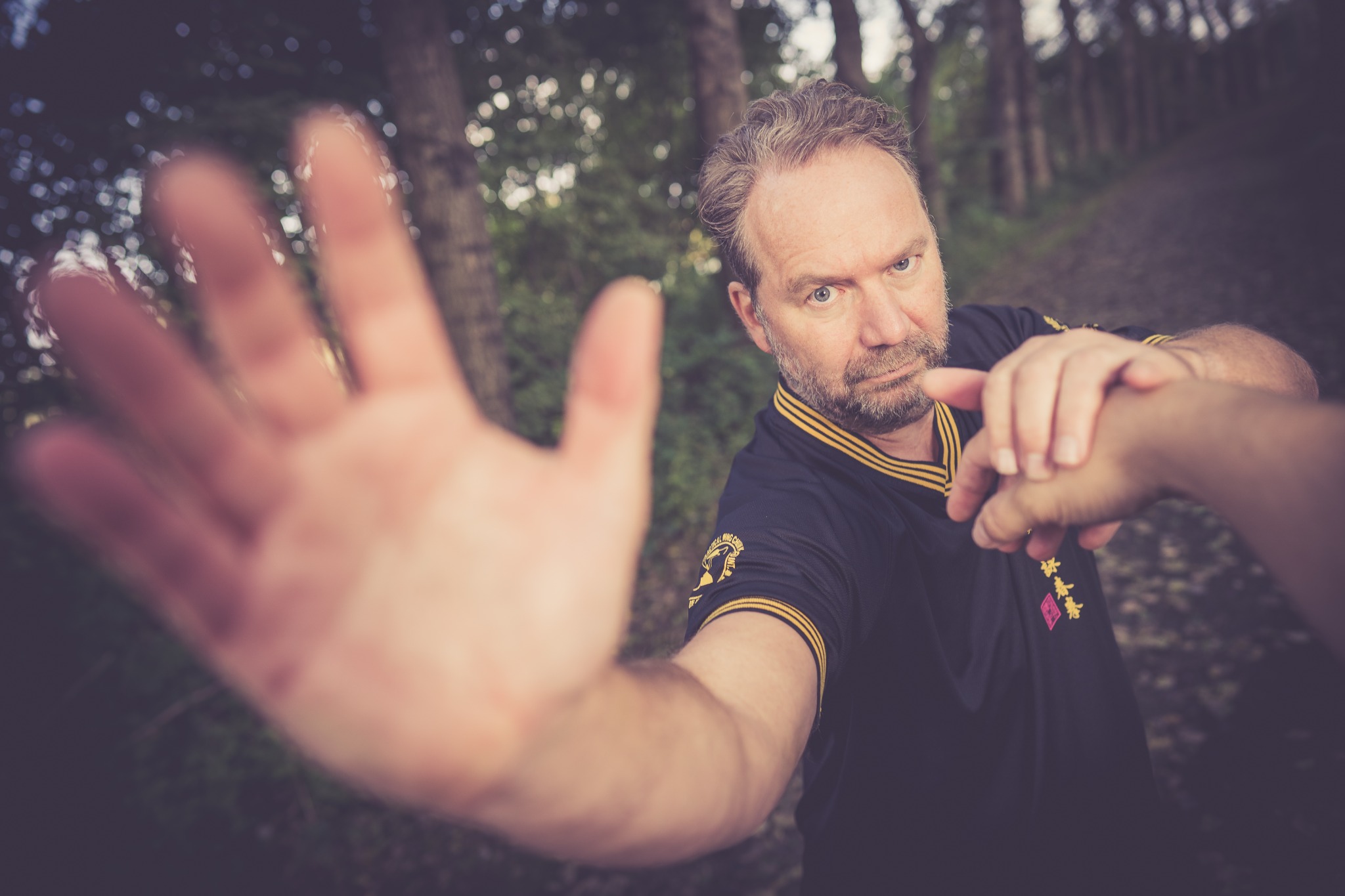
From Siu-Nim-Tau to Cham-Kiu and Biu-Ji
Learning a new form can feel like moving on. You recognise the sequence, remember the techniques and begin looking towards the next stage. Yet the progression from Siu-Nim-Tau through Cham-Kiu to Biu-Ji becomes more useful when you see how each form changes your understanding of the others. The movements develop, but so does your ability to recognise what a situation requires.
Siu-Nim-Tau: Learning to Face
Siu-Nim-Tau gives you time to examine the relationships within your own body. With less movement to organise, you can notice whether your shoulders rise, your elbows lose their direction or your stance becomes rigid. You begin to distinguish the effort needed to maintain structure from the tension that interferes with it.
In my books, facing is an important part of this foundation. Facing your opponent helps organise your structure and makes your weapons available without unnecessary repositioning. The centerline, arm angles and forward intention become practical relationships to investigate. Through partner work, you discover whether those relationships hold when pressure arrives. A shape that looks correct still needs to function in contact.
Cham-Kiu: Carrying the Foundation into Movement
Cham-Kiu changes the conditions. Your opponent may be beyond reach, moving away or approaching from an angle. You now need to manage distance and establish a bridge while keeping the qualities developed in Siu-Nim-Tau.
This is where chasing becomes relevant. Chasing requires judgement about distance, direction and timing. Reaching with the arms while leaving the body behind weakens your position. Stepping too close can take away the space your technique needs. The feet, turning body and arms must cooperate so that contact brings you into a useful relationship with your opponent.
Although Siu-Nim-Tau applications already include stepping, Cham-Kiu develops this coordination further. Turning and moving reveal whether your balance and structure remain available throughout a transition. A bridge may involve the arms, legs or body; its value lies in the contact and control it makes possible. Partner practice helps you recognise when to establish it, maintain it or change your approach.
Biu-Ji: Finding Direction under Difficult Conditions
Biu-Ji asks what happens when your preferred position is no longer available. You may be crowded, surprised or turned away from your opponent. There may be too little space to organise the response you would normally choose.
In my understanding, pointing towards the centerline gives these situations a direction. Intent helps organise the response, while compact movement, spiralling and coordinated use of the body allow you to work from the position you actually have. Regaining the ability to face and act becomes more useful than trying to reproduce an ideal starting shape.
This also gives Biu-Ji an offensive purpose. Improving your position and applying pressure can occur within the same response. Its study asks for greater precision in relaxation, angles and timing, especially when relying on the strength of an isolated arm is insufficient.
The progression continues back through the earlier forms. Biu-Ji can reveal unnecessary effort in your Siu-Nim-Tau or a loss of connection in your Cham-Kiu turning. Return to them with that knowledge and familiar movements begin to feel different. Facing, chasing and pointing towards the center become connected abilities, developed through forms, examined through contact and refined through continued practice.
Continue the journey
Explore the three books
The My Personal Wing Chun Tao series follows this progression in more detail, from the foundations of Siu-Nim-Tau through Cham-Kiu to the refinements of Biu-Ji.
On Amazon: Siu Nim Tau · Cham Kiu · Biu Ji
Prefer a shorter introduction?
Download Structure in Wing Chun
The free eBook follows structure from Siu Nim Tau through Cham Kiu to Biu Ji.
Tags: Wing Chun, Practical Wing Chun, Siu Nim Tau, Cham Kiu, Biu Ji, facing, bridging, centerline.
Read more on Siu Nim Tau and Cham Kiu, browse all Wing Chun articles, or consult the terminology reference.